3D Natural Disaster Pack: Dynamic Visual Storytelling
More Than a Collection: A Design Language
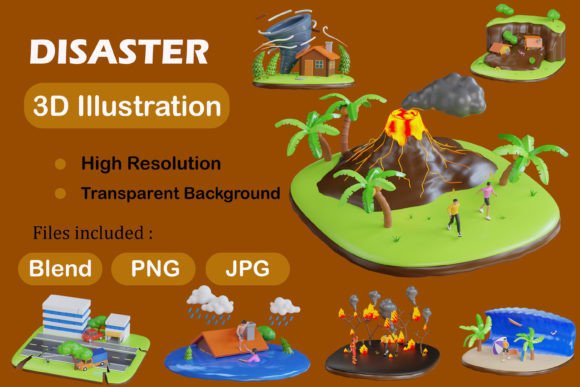
When you first encounter the 3D Natural Disaster Pack, you're not just looking at a set of files; you're looking at a visual vocabulary for chaos and resilience. This isn't your standard clipart. The pack, containing 10 JPGs, 10 PNGs, and 10 Blender files, offers a sophisticated, high-fidelity take on natural phenomena. The style is unmistakably modern and three-dimensional, with a focus on photorealistic textures, dramatic lighting, and a sense of controlled energy. Think of a tornado rendered with swirling, detailed debris, or a flood where every water droplet catches the light. The personality is intense yet professional, designed to convey power and urgency without tipping into gratuitous sensationalism. It’s a toolkit for storytellers who need to communicate about serious events with visual impact and clarity.
Where This 3D Asset Pack Truly Shines
The real value of a premium asset like this lies in its versatility. You’re not locked into a single use case. As a designer or content creator, you can deploy these assets across a surprising range of projects. The PNG files with transparent backgrounds are perfect for layering into social media graphics or website hero sections. Imagine a climate advocacy group using a stylized earthquake crack to visually break a webpage, guiding the user's eye. The JPGs work beautifully as background elements for posters or digital ads, adding depth and texture. For those in UI & UX design, subtle elements could be used to illustrate "disruption" in a user flow or to create compelling, thematic icons for a weather-related app.
For entrepreneurs and marketers, the applications are equally practical. A small business owner developing a brand around resilience, emergency preparedness, or even outdoor adventure gear could use a stylized tsunami wave as part of their logo design or brand identity. The consistency of the 3D style across all the files ensures that whether it's on a banner, a brochure, or a social media post, the visual language remains cohesive. Bloggers and publishers can use these illustrations to dramatically enhance articles on environmental science, climate change, or even in fictional storytelling, providing readers with a visual anchor that elevates the entire editorial experience.
The Strategic Advantage of Consistent 3D Imagery
Why does this matter for your project's success? Consistent, high-quality visuals are the backbone of professional perception. Using assets from a unified pack like the 3D Natural Disaster Pack ensures your visuals speak the same design language. This consistency directly influences brand recognition and trust. A disjointed collage of stock images feels amateurish, while a curated set of 3D illustrations communicates intention and investment. It tells your audience you care about the details, which in turn makes your message more credible.
Furthermore, these assets are powerful tools for visual hierarchy. A well-placed 3D volcanic eruption can immediately draw the eye to a key headline or call-to-action. The inherent drama of the subject matter, when handled with the pack's stylized realism, commands attention without overwhelming the core message. It’s a delicate balance, and this toolkit is built to achieve it. The professional rendering style ensures that even in a poster design or a dense web design layout, the illustrations integrate seamlessly, enhancing rather than distracting from your typography and layout.
Practical Guidance for Implementation
Before you dive in, a thoughtful approach will yield the best results. First, evaluate the project fit. This pack excels in contexts where power, change, or environmental themes are relevant. It might be less suitable for a serene, minimalist spa brand. Next, consider your font pairing. The bold, dramatic nature of these 3D illustrations pairs well with clean, strong typefaces. A geometric sans serif font can provide a modern, stable counterpoint, while a classic serif font could add a layer of authority and gravity. Avoid overly decorative script fonts or handwritten fonts that might clash with the technical precision of the 3D renders.
The inclusion of Blender files is a significant advantage for those with 3D skills. It allows for ultimate customization—adjusting angles, lighting, or even combining elements. For most users, however, the pre-rendered JPG and PNG files are the workhorses. Always test readability when overlaying text. The complexity of a 3D tornado scene, for example, might require a text box with a subtle background or a strong drop shadow to ensure legibility. Finally, review the licensing. As a commercial design asset, confirm that the license covers your intended use, whether it's for a client's website, a printed product for sale, or a personal blog.
Elevating Your Narrative with Purpose
Ultimately, the 3D Natural Disaster Pack is a specialized instrument for visual communication. It’s not about using a flashy asset for its own sake, but about selecting a tool that aligns with and amplifies your narrative. For the designer building a climate-tech startup's identity, the marketer creating a campaign about resilience, or the educator crafting an impactful presentation, this pack provides a foundation of high-quality, cohesive imagery. It allows you to move beyond generic stock photos and create visuals with depth, emotion, and professionalism. By integrating these assets thoughtfully, you transform your projects from merely informative to genuinely compelling, ensuring your message doesn't just get seen—it gets felt and remembered.